Home › Voles & Pocket Gophers
Voles & Pocket Gophers in Castle Rock Yards
Runways in the lawn, chewed bark or fresh soil mounds? Learn to tell voles from pocket gophers and the control options Colorado State University Extension describes.
Independent information website. Castle Rock Rodent is not a pest control company. We don’t inspect, trap or treat, and we aren’t taking service requests yet. How this site works
Voles or Pocket Gophers? Compare the Signs
Short answer: small open holes and grass runways usually mean voles. Fan-shaped soil mounds with plugged holes usually mean pocket gophers.
The two cause different damage and need different approaches, so it helps to identify which one you have first.
| Sign | Voles | Pocket gophers |
|---|---|---|
| Holes and mounds | Small open holes about 1 to 2 inches across, no mound | Fan-shaped or round soil mounds with the hole plugged |
| Surface paths | Narrow runways through matted grass | Usually none; they rarely come to the surface |
| Plant damage | Gnawed bark low on trunks and shrubs, sometimes all the way around | Plants that suddenly wilt because roots were eaten |
| When it shows | Mostly in winter, under snow; often noticed at snowmelt | Soil “cores” (eskers) appear as snow melts in spring |
| Activity | Active all year | Mostly underground all year |
Sources: CSU PlantTalk: Vole vs Pocket Gopher Damage, CSU Extension: Managing Voles in Colorado (6.507)
Voles
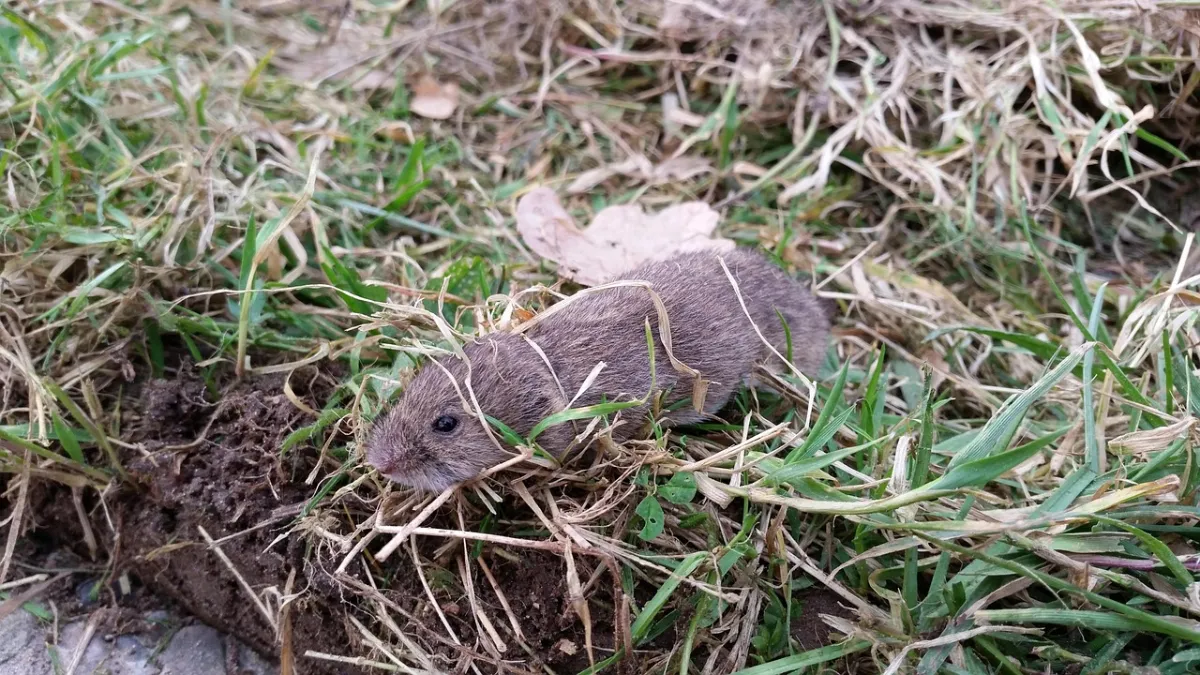
Voles are small, stocky rodents with short tails, small eyes and blunt heads. Colorado has eight species. CSU Extension notes that most vole damage happens in winter, when they travel under snow, and that damage is often worst after heavy snowfall. Populations tend to rise and fall over several years.
Vole control: protecting trees, shrubs and lawns
- Wire guards: wrap young trees and shrubs with 1/4-inch hardware cloth. CSU suggests the guard reach about 18 inches above ground and 3 to 6 inches below the surface.
- Cut back cover: mow tall grass and clear a ring of about 2 feet around trunks, so voles have less shelter.
- Trap small populations: set snap traps across active runways, baited with rolled oats or peanut butter. CSU notes fall is a good time and that trapping isn’t practical for large areas.
- Repellents: some are labeled for voles, but CSU says evidence of how well they work is limited, and they need reapplying after rain.
About poison baits: CSU Extension describes zinc phosphide, the most common vole bait in Colorado, as a restricted use pesticide that is extremely toxic to children, pets and wildlife. Restricted use products are applied by certified applicators. For any rodent bait, read and follow the label exactly and use enclosed bait stations where the label requires them.
CSU Extension notes that voles are non-game wildlife in Colorado and may be controlled when they cause damage.
Pocket Gophers
Pocket gophers spend almost all of their lives underground. You usually see their mounds, not the animals. Their tunnels are about 2.5 to 3.5 inches wide and usually 4 to 18 inches deep, according to CSU PlantTalk.
Pocket gopher control options
- Trapping: CSU Extension describes finding the plugged hole in a fresh mound, probing to locate the tunnel, and setting gopher traps in the tunnel. Check traps often and move any that don’t catch within a couple of days.
- Barriers: wire or mesh barriers can protect valuable plantings, but they take work to install.
- Protect lines: gophers can chew buried irrigation lines and cables, so larger, sturdier conduit helps.
Bait and fumigant products for gophers change over time, and some are restricted use. Check current product labels, and consider a professional for large or persistent problems.
Sources: CSU Extension: Managing Pocket Gophers in Colorado (1991, archived), CSU PlantTalk: Vole vs Pocket Gopher Damage
Before You Trap Near a Creek
The Town of Castle Rock says Preble’s meadow jumping mouse, a federally threatened species, lives in dense vegetation along some local drainageways. If your yard borders a creek or wetland, check with the U.S. Fish and Wildlife Service Colorado Field Office (303-236-4773) before trapping outdoors there.
Source: Town of Castle Rock: Wildlife
Mice or rats in the house?
Voles and pocket gophers rarely come indoors. If you’re finding droppings or hearing scratching inside, see the mouse control guide instead.
Vole and Gopher Questions
Do voles come into the house?
Voles mostly stay outdoors in grass, gardens and around shrubs. Droppings and gnawing indoors usually point to mice.
Why did I only notice the damage in spring?
Voles do much of their feeding under snow cover in winter, so the runways and gnawed bark appear when the snow melts. Gopher soil cores also show up at snowmelt.
Are moles the same as gophers?
No. This guide covers voles and pocket gophers, which are rodents. Check the signs above against what you see.
When should I call a professional?
For large lawns or orchards, repeat damage each winter, or when restricted use baits are being considered.