
Home › Mouse Control
Mouse Control in Castle Rock, CO
How to confirm you have mice, find where they get in, trap them safely and keep them out. Based on CDC guidance for homeowners.
Independent information website. Castle Rock Rodent is not a pest control company. We don’t inspect, trap or treat, and we aren’t taking service requests yet. How this site works
Signs of Mice in Your Home
Short answer: mouse control in Castle Rock homes works best as trapping plus sealing. Snap traps remove the mice already inside, and closing gaps as small as 1/4 inch keeps new ones out.
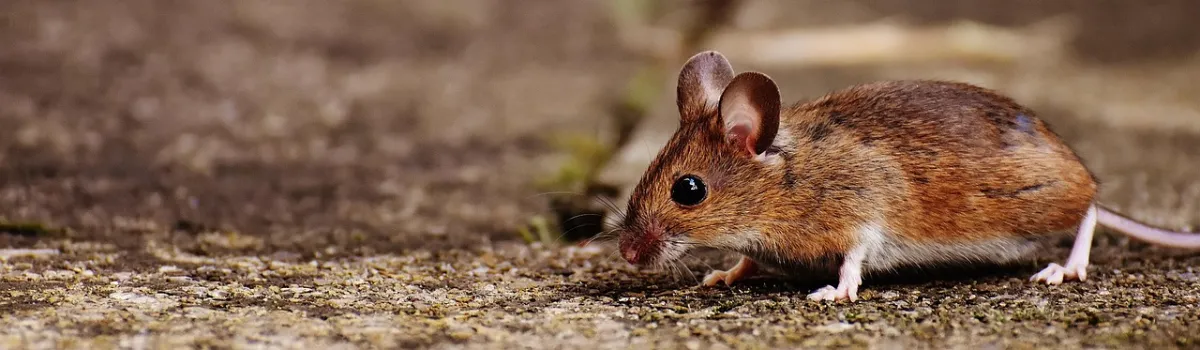
Most people notice mice by what they leave behind. Look for:
- Droppings: small, dark pellets along walls, in drawers, under sinks or behind appliances.
- Sounds: scratching or scurrying in walls, ceilings or the attic, usually at night.
- Gnawing: chewed food packaging, cardboard, insulation or wiring.
- Nests: shredded paper, fabric or insulation in quiet corners and storage boxes.
- Smell: a stale, musky odor in cabinets, closets or the garage.
Larger droppings and heavier damage can point to rats instead. The trapping and sealing steps are similar, but rats need larger traps.
House mice and deer mice
Both can get into Colorado homes, garages and sheds. Deer mice matter most for health: Douglas County health officials say the deer mouse is the rodent that most commonly exposes people in Colorado to hantavirus. You usually can’t tell the two apart with confidence, so treat all droppings and nests with the same cleanup precautions.
Read how to clean up droppings safely before you touch any nest or droppings.
Where Mice Get In
The CDC notes that a mouse can squeeze through a hole about the width of a pencil, roughly 1/4 inch. Check these places first:
Inside
- Under and behind kitchen cabinets and appliances
- Around pipes under sinks, washers, water heaters and furnaces
- Around floor vents, dryer vents and floor drains
- Closet corners, and where the floor meets the wall
- Attic, basement and crawl space
Outside
- Gaps where electrical, plumbing, cable and gas lines enter
- The gap between the foundation and the ground
- Doors and windows without weather stripping
- Attic and crawl space vents
- Roof edges, eaves and soffits
How to seal gaps
- Small holes: pack with steel wool, then hold it in place with caulk or spray foam.
- Larger holes: use hardware cloth, lath screen, metal sheeting or cement, cut to fit around pipes.
- Seal garages and outbuildings too, not just the house.
Mice Removal: Step by Step
- Map the activity. Note where you see droppings, gnawing or nesting. That is where traps go.
- Use snap traps. The CDC recommends traditional snap traps sized for mice. It advises against glue traps and live traps, which can frighten rodents into urinating and raise the risk of disease.
- Place traps correctly. Set them against walls in a “T” shape, with the baited end touching the wall. Good spots are behind the stove and refrigerator, at the back of cabinets, and near likely entry points.
- Bait lightly. A small amount of chunky peanut butter on the bait pan is enough.
- Check traps every day. Wear gloves, and follow the cleanup steps for any dead mice.
- Seal entry points. Trapping removes the mice already inside. Sealing stops new ones from moving in.
- Keep going until activity stops. The CDC suggests checking and moving bait for at least 15 days, and longer if you still see signs.
Keep traps and baits away from children and pets. If trapping alone doesn’t work, the CDC says poison bait can be considered. Use only EPA-registered products in a tamper-resistant bait station, and follow the label exactly.
Make Your Home Less Attractive
- Store food, pet food and birdseed in sealed containers.
- Don’t leave dishes, food or pet bowls out overnight.
- Keep trash in bins with tight-fitting lids.
- Move woodpiles and clutter away from the house.
- Keep storage boxes off the floor in garages and basements.
Sources: Douglas County Health Department: Rodents, CDC: How to Seal Up to Prevent Rodents
A protected mouse lives near Castle Rock creeks
The Town of Castle Rock says Preble’s meadow jumping mouse, a federally threatened species, has been found near several local drainageways. It lives in dense vegetation along streams.
If you plan to trap outdoors near a creek or wetland, check with the U.S. Fish and Wildlife Service Colorado Field Office first (303-236-4773). This doesn’t apply to mice inside your home.
Source: Town of Castle Rock: Wildlife
Why Mice Come Back
- Gaps were never sealed. Trapping alone leaves the way in open.
- Only the obvious hole was fixed. Mice often use several entry points, including utility lines and the gap at the foundation.
- Food is still easy to reach. Pet food, birdseed and open pantry items keep drawing them back.
- Traps came out too early. The CDC suggests keeping bait out for at least 15 days, and longer while you still see signs.
Mice control checklist
- Droppings and nests mapped
- Snap traps set along walls
- Small gaps packed with steel wool and caulk
- Larger gaps covered with hardware cloth or metal
- Food and trash sealed
- Traps checked daily for at least 15 days
When Mice Control Needs a Professional
Consider a professional when you keep catching mice after a couple of weeks, when you can’t find how they get in, or when the attic, insulation or ductwork is involved. The CDC recommends a professional if rodents have entered heating or cooling ducts.
Our inspection and exclusion guide explains what a good inspection covers, what affects the cost and how to check a provider.
Mouse Control Questions
How long does it take to get rid of mice?
It depends on how many there are and whether the entry points are sealed. The CDC suggests keeping traps baited for at least 15 days and continuing while you still see signs.
Can I use glue traps or live traps?
The CDC advises against both. Trapped mice can urinate from stress, which increases your exposure to germs. Snap traps are the recommended option.
Is it safe to vacuum mouse droppings?
No. Sweeping or vacuuming can put tiny particles into the air. Spray droppings with disinfectant, let them soak, then wipe them up with paper towels while wearing gloves.
Should I use poison?
Start with sealing and snap traps. If the problem continues, use only EPA-registered bait in a tamper-resistant station and follow the label. Keep it away from children and pets.